
Your trusted source for independent, high-quality, science-based advice
© 2025 Berryworld, All Rights Reserved

Our Lincoln variety trial is under cover for the first time this year. The tunnel is built to vent freely, but it’ll still be hotter than our other uncovered site. Spider mites, of course, like it hot and thrive in the drier tunnel environment. Consequently, we’re starting the battle earlier than we usually do.
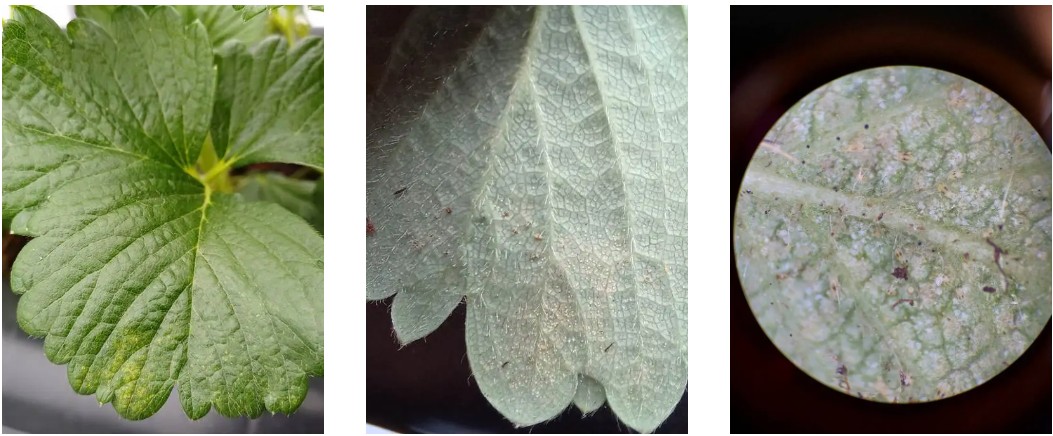
The predator strategy has worked well for us in the past, so I’m going to try it again this year. This article is the first in a series on getting predators to work for spider mite control. The journey starts with successful establishment of a breeding population of predators.
Step 1: Which predators do I need?
We have limited options for commercially available predators in NZ, so the choice isn’t too difficult. I’m going with Phytoseiulus persimilis. It is a “spider mite specialist” and I’m judging that I have enough spider mites already to keep them in tucker.
Step 2: How many predators do I need?
Bioforce has some guidance on their website, and they suggest 2.5 persimilis per square meter. Our tiny trial has 75 square meters, requiring about 200 persimilis. The smallest order is 1000 persimilis, so that’s what I ordered.
Step 3: When should I release them?
I can’t go too early because persimilis are spider mite specialists, so they do need some spider mites to eat or they will starve. My first wobble with this predator establishment step was a timing mistake.
I saw this spider mite damage on Oct 9th, and thought I had placed an order for persimilis on Monday 13th Oct. But I somehow clumsily didn’t complete the online order and the predators didn’t turn up. I tried again and they arrived on 22nd October.
Unfortunately, I’m already I’m off to a late start—two full weeks between making the decision to get predators and them arriving. Next year I’ll plan ahead to make a first order for 7th October.
Step 4: Releasing the predators
It’s been windy and I figured the mites would do better in a calm morning so they have a chance to crawl out of the vermiculite and onto the plant before getting blown away.
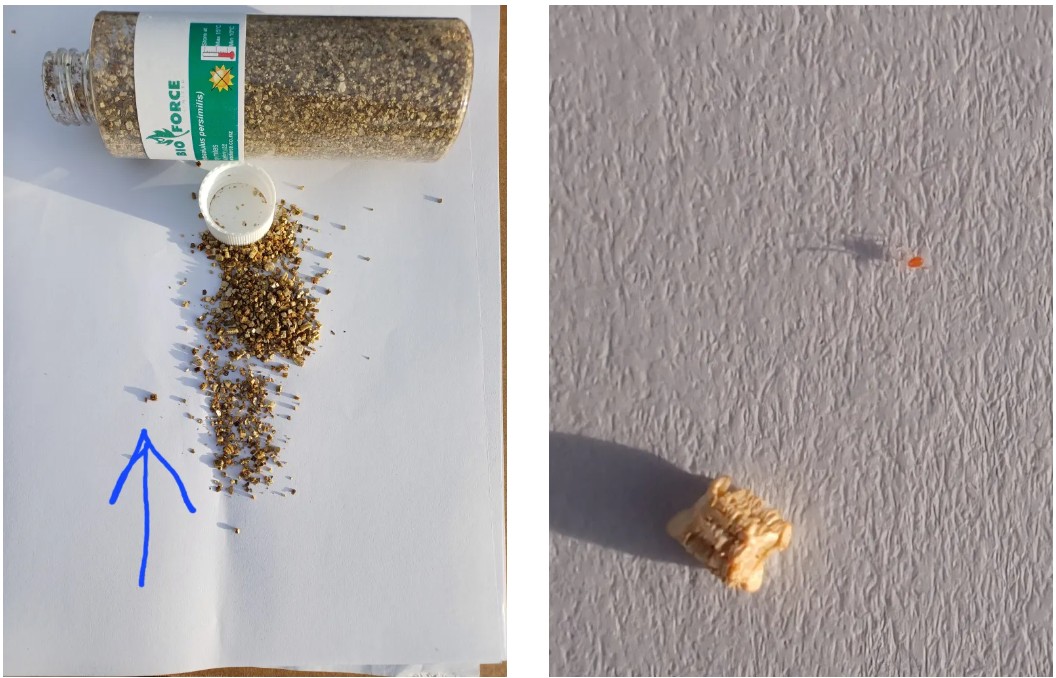
I wanted to make sure the mites were alive when they arrive. I rotated the bottle as per instructions, and poured some vermiculite out onto a white paper. After a few moments, I could see a couple red adults wandering away across the paper. I have no idea how many I “should” be seeing if there were 1000 in the bottle, but I can confirm that at least some are live and active.
Step 5: Keeping the predators happy
To start with, I haven’t used any fungicides or insecticides that would have harmful residues. The SGNZ industry spray list has indications of what to avoid, both insecticides and fungicides (mancozeb, carbendazim, metalaxyl, chlorothalonil). Preflowering, sometimes growers use broad spectrum “clean up” sprays; be aware that these can be very persistent and harm predator establishment.
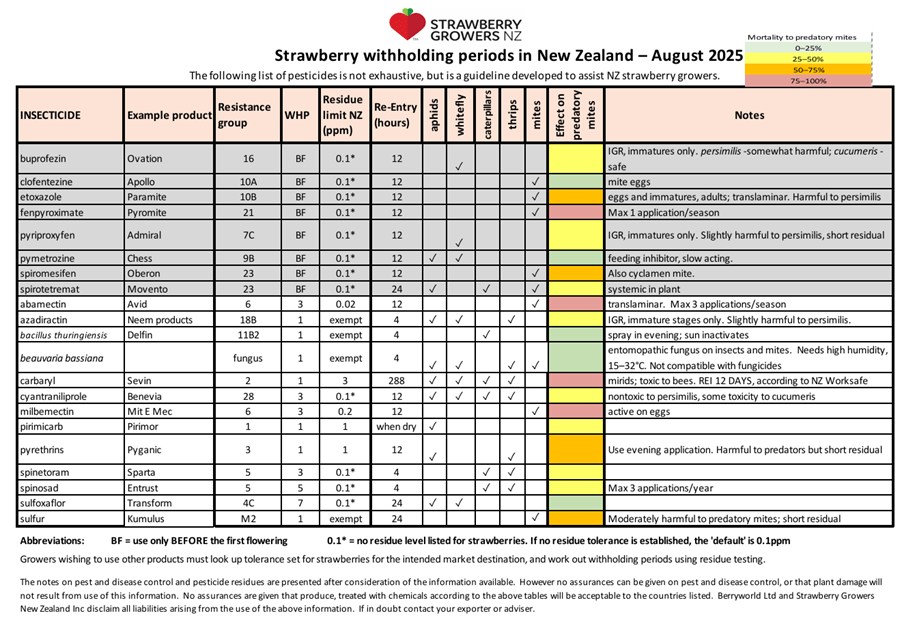
This season, I’ve dipped plants at planting with phosphorous acid, and sprayed Transform for aphids. We should be ok in the agchem department.
I went back five days after release to peer anxiously at the spider mite colonies, hoping to see the bright red persimilis amongst them, or at least an egg or two to indicate that the adults have found the spider mite colonies. The number of new spider mite eggs was shocking—again, this pest can ramp up super quickly in hot weather. I’m already regretting my two week late predator release.

Most of the patches of spider mites did not yet have persimilis amongst them. I found one leaf where I could see a persimilis adult, and a couple of the larger persimilis eggs amongst the spider mite eggs. I wish I had seen more, but given the reality of the released numbers, this was probably as good as I could have expected in 5 days.
I’ll continue to monitor the battle in the coming weeks!