
Your trusted source for independent, high-quality, science-based advice
© 2025 Berryworld, All Rights Reserved

NZ allows off-label pesticide use, meaning we can apply to strawberries a product registered for instance, in grapes. This is a lifeline for minor crops in NZ whose volumes of use don’t make a business case for companies to support a label registration.
However, it also makes it somewhat complicated to work out what rate to use, since it’s not a simple matter of following the crop instructions on the label.
The other week I found a population of aphids starting to multiply in our strawberry variety trial.
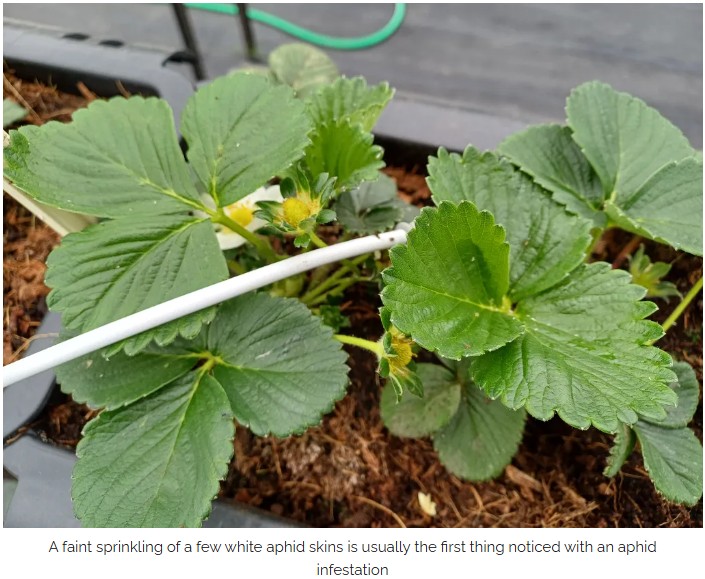
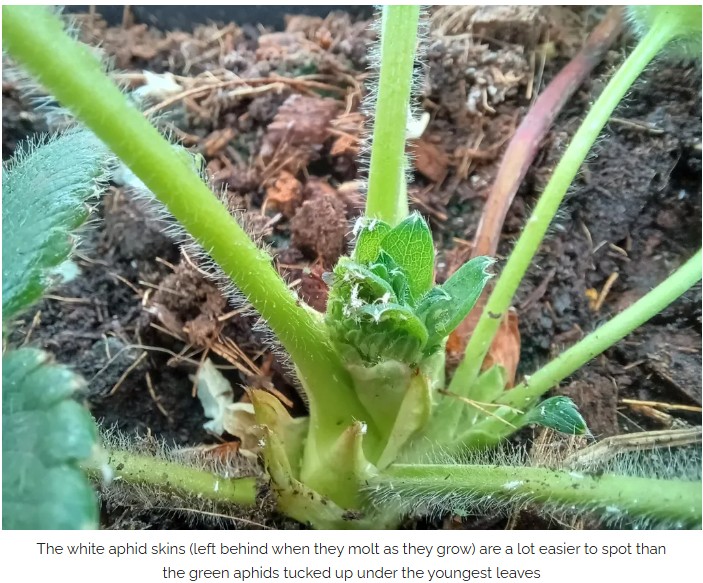
I’d like to use Transform on them, which I chose because:
Now I must work out the rate
Smart people debate the best way to do this, and I can see validity of different methods. Here are the steps I have taken.
The NZ label (‘Transform Isoclast active’ containing 240 g/L sulfoxaflor) has rates like 100ml/ha for forage crops and 200-300 ml/ha for vegetable crops. I’m going to consider a strawberry more akin to a vegetable for this case.
To boost my certainty level around the rate to choose, I checked the Australian Transform label (also ‘Transform Isoclast active’ containing 240g/L sulfoxaflor). Thankfully, this label has the strawberry rate at 200-300 mL/ha, which is consistent with my guess from the NZ label.
The rate range gives some leeway—I’m going to choose the higher end of the rate range because I want the chemical activity to last longer as I expect the spring aphid pressure to be high—it has been and will continue to be great warm weather for aphids, as well as dry under the tunnel.
I have only 75m2, which is 0.0075 hectares.
For growers with rows and alleyways where the sprayer is configured to only spray the plants and not the alley, a 100 x 100m *1 hectare) block might have only 2/3 of that area actually sprayed, or 6600 m2. You can consider just the crop canopy area actually sprayed in your calculations.
I estimate that just 1 litre will be required to cover my 75m2 with my little hand-held sprayer. Using the 200-300ml/ha label guide, that gives me 1.5-2.25 ml of Transform for my little plot.
I need to be certain that the label I’m using to work out my rates has the same percent active ingredient as the product I can buy in NZ. This is not always the case, though in my Transform example it was. Labels from other countries can be from products ranging from 22% to 50% sulfoxaflor.
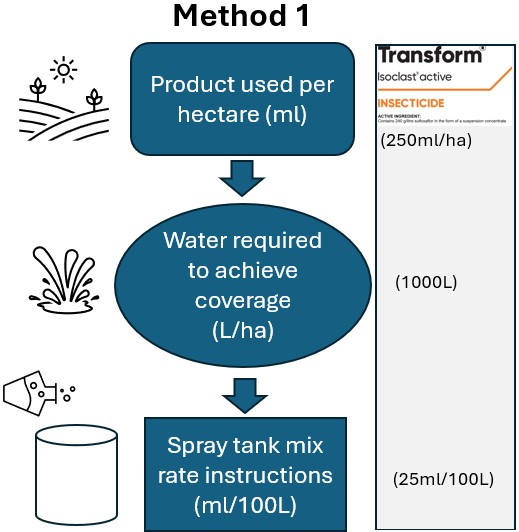
In the end, I need to know how many ml of product to put per litre of water in the spray tank—a concentration. To translate from a label that doesn’t have a rate in terms of ml product per litre of water, I have to know what water my sprayer is going to use to get the chemical spread over my plants. This number should logically change over the season as my plants go from tiny transplants to full canopies, which means that my water rate required to cover that canopy adequately ought to be constantly changing. Some growers do this by turning off nozzles early in the season and bringing them back online as the canopy grows, effectively reducing the sprayed area when the crop is small.
The starting point should always be knowing what volume of water is required by your sprayer set-up to obtain good coverage. Tomatoes NZ has produced a good video tutorial on this topic, See their production at https://youtu.be/7DfHD_De_js?si=imwwJJY9GRqeIcQV . See also two articles on assessing spray coverage:
An alternative short-cut that can be used is to assume that the chemical product rate per hectare on the label is for the full sized crop, and that “spray to run-off” might require 1000L/ha for full sized strawberries with an average sprayer set-up. 250 ml of Transform per hectare mixed into 1000L spray tank is 25 ml Transform/100L spray volume. If plants are small, they might be only taking up 40% of the ground area (40% effective spray area), and the sprayer might cover the plants using 400L of water, into which you put 100 ml of Transform. When the canopy is full, it might take the whole 1000L of water and 250 ml of Transform to achieve coverage.
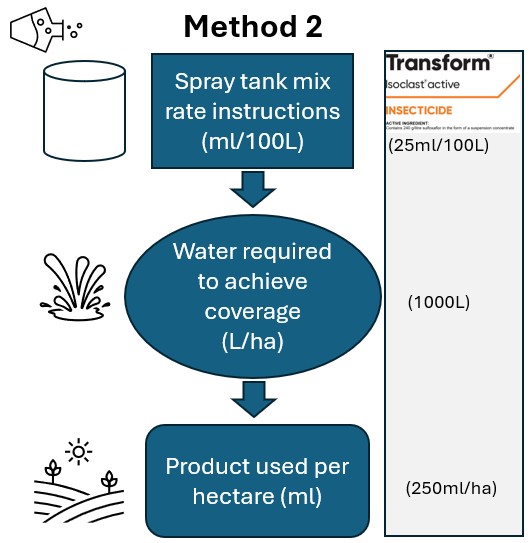
For either method, an understanding of the water volume required to get good coverage with your sprayer equipment is the essential.
Water is a delivery vehicle, and moving air can be too. The water dries quite quickly, and the chemical remains on the plant. The aim is to have enough active ingredient left to impact the pest, and most of the time that means active ingredient covering the plant surface where a pest will encounter it.
In the examples above, method 1 and method 2 give the same results in terms of chemical applied per hectare and chemical mixed into tank per 100L of sprayer water. Real life isn't always this tidy.
Some growers will have sprayers that use 1000L of water per hectare to cover the canopy, meaning the rate of Transform per litre of water in the spray tank is 20-30ml/100L. Others will have sprayers with more air-assist that use moving air as part of the spray delivery mechanism, and might be using about 500L of water per hectare, meaning their tank mix concentration would be 40-60 ml/100L.
Whichever method you choose, it is a requirement to keep good records of the chemicals applied, the tank mix rate, and the total volume applied to each block.